
Your Brain Is Holding Its Breath: The Hidden Story of Sleep Apnea
November 18, 2026
Quick answer
Sleep apnea is a condition where breathing repeatedly stops and starts during sleep, briefly cutting off oxygen to the brain. It is diagnosed with a sleep study and treated with CPAP, custom dental appliances, and lifestyle changes.
936 million
Adults worldwide estimated to have sleep apnea
5 or more
Breathing events per hour needed for a diagnosis
Often silent
Many cases go undiagnosed for years
Key takeaways
- Sleep apnea causes repeated breathing pauses that lower oxygen to the brain and strain the heart.
- Loud snoring, gasping, morning headaches, and daytime fog are common warning signs.
- A sleep study, in a lab or at home, confirms the diagnosis and measures its severity.
- CPAP and custom dental appliances are both proven ways to keep the airway open.
- Your dentist in Berlin, NH can spot early clues and fit a comfortable oral appliance.
Answer First: What Sleep Apnea Really Does to Your Brain and Body
Picture this. You are deep asleep, and for ten seconds your breathing simply stops. Your chest fights for air, your oxygen dips, and your brain fires off a tiny alarm to jolt you back to breathing. Then it happens again. And again. Dozens of times an hour, all night long. That is sleep apnea, and it is far more than noisy snoring.
The short answer: repeated pauses in breathing starve your brain of oxygen
Sleep apnea is a condition in which breathing repeatedly pauses while you sleep. Each pause briefly lowers the oxygen reaching your brain and the rest of your body. Your brain responds by pulling you out of deep sleep just enough to reopen the airway, which is why you can spend eight hours in bed and still wake up drained.
Why your brain is holding its breath is more than a metaphor
During each pause, your brain literally waits for air. These micro-awakenings are so brief that you rarely remember them, yet they shatter the restful, restorative sleep your body needs. The result is a brain that never truly powers down, which explains the fog, irritability, and heavy fatigue that follow you into the day.
When to talk to a doctor or dentist about screening
If you snore loudly, wake up gasping, feel exhausted despite a full night in bed, or a partner notices you stop breathing, it is time to ask about screening. You do not need every symptom to be at risk. A short conversation with your doctor or dental team can point you toward the right testing.
What Is Obstructive Sleep Apnea?
Obstructive sleep apnea is the most common form, and it happens when the soft tissues at the back of your throat relax and block the airway during sleep. Air cannot get through, breathing stalls, and your body scrambles to reopen the passage.
How the airway collapses during sleep
When you drift off, the muscles in your tongue and throat loosen. For many people, that relaxation is harmless. For others, the tissues sag far enough to narrow or fully close the airway, like stepping on a garden hose. The airflow stops until your brain triggers a gasp that snaps everything back open.
Obstructive versus central sleep apnea in plain language
There are two main types. In obstructive sleep apnea, the airway is physically blocked even though your body is trying to breathe. In central sleep apnea, the brain briefly forgets to send the signal to breathe at all. Obstructive is by far the more common, and it is the type most often helped by dental appliances.
How common is it? Prevalence in US adults
Sleep apnea is strikingly common. A global review estimated that nearly 936 million adults worldwide have mild to severe obstructive sleep apnea. Many of them have no idea, because the condition quietly does its damage while they sleep.
The Hidden Symptoms Most People Miss
The most telling signs of sleep apnea often show up at night, when you are least able to notice them, and spill into your days as unexplained tiredness. Learning to read these clues is the first step toward relief.
Nighttime red flags: snoring, gasping, and choking
Loud, chronic snoring is the classic signal, especially when it is broken by silent pauses followed by a sudden gasp, snort, or choke. These sounds are the audible evidence of an airway opening and closing throughout the night.
Daytime clues: fatigue, brain fog, morning headaches
Because your sleep keeps fragmenting, mornings can feel rough. Watch for waking with a dull headache, struggling to concentrate, feeling foggy by mid-afternoon, or dozing off during quiet moments. Mood changes and short patience are common too.
Signs a partner may notice before you do
Bed partners frequently spot the problem first. They may describe long silences followed by gasps, restless tossing, or breathing that seems to catch. If someone has mentioned this to you, take it seriously.
Causes and Risk Factors You Should Know
Sleep apnea develops from a mix of physical traits, lifestyle habits, and health conditions, and some of those factors are within your control. Understanding your personal risk helps you act early.
Anatomy, weight, and age
The shape of your airway matters. A naturally narrow throat, a large tongue or tonsils, or a smaller jaw can all crowd the passage. Carrying extra weight adds soft tissue around the neck, and the risk tends to climb with age as throat muscles relax more easily.
Lifestyle and medical contributors
According to the National Heart, Lung, and Blood Institute, factors such as obesity, smoking, alcohol use, and certain medical conditions raise the risk of sleep apnea. Alcohol and sedatives relax throat muscles further, and nasal congestion can make breathing through the night even harder.
Why some risk factors are modifiable
Here is the hopeful part. While you cannot change your age or jaw shape, you can address several contributors. Reaching a healthier weight, limiting alcohol near bedtime, quitting smoking, and treating nasal issues can all ease the strain on your airway and improve your sleep.
Why Sleep Apnea Is a Whole-Body Health Issue
Sleep apnea is not confined to your nights. The repeated oxygen drops and broken sleep ripple outward, touching your heart, your mind, and even your safety behind the wheel.
Links to heart health, blood pressure, and metabolism
Each time oxygen falls, your body releases stress signals that raise blood pressure and strain the heart. Over time, untreated sleep apnea is associated with higher blood pressure and added cardiovascular stress, which is why doctors take it so seriously.
The daytime safety impact: focus, mood, and driving
Chronic exhaustion dulls reaction time and clouds judgment. That matters most when you are driving or operating machinery. Drowsy days can also strain relationships and work performance, turning a nighttime problem into an everyday one.
Why screening matters even without obvious symptoms
Some people have sleep apnea without dramatic snoring. The U.S. Preventive Services Task Force review notes that many adults with obstructive sleep apnea remain undiagnosed. That silence is exactly why screening, when you have risk factors, is worthwhile.
How Sleep Apnea Is Diagnosed
Sleep apnea is diagnosed through a combination of screening questions, a physical exam, and a sleep study that measures your breathing overnight. The study is the key that confirms the condition and reveals its severity.
Screening questions and physical exam
It often starts with simple questions about your snoring, daytime sleepiness, and sleep quality. A clinician may also examine your mouth, throat, neck size, and jaw for features that narrow the airway.
In-lab sleep studies versus home sleep apnea testing
From there, testing takes one of two paths.
In-lab sleep study
You spend a night at a sleep center while sensors track your breathing, oxygen, heart rate, and sleep stages. It is thorough and ideal for complex cases.
Home sleep apnea test
For many adults, a simpler take-home device records breathing and oxygen in your own bed. It is convenient and often the first choice for straightforward cases.
What the AHI number means for your diagnosis
The results produce an AHI, the average number of breathing events per hour. In general, five or more events per hour supports a diagnosis, with higher numbers indicating more severe apnea. The American Academy of Sleep Medicine outlines these testing approaches for adults.
Treatment Options: From CPAP to Oral Appliances
Sleep apnea is highly treatable, and the right approach depends on your severity, comfort, and daily life. Most people find real relief once the airway stays open through the night.
CPAP therapy as a first-line approach
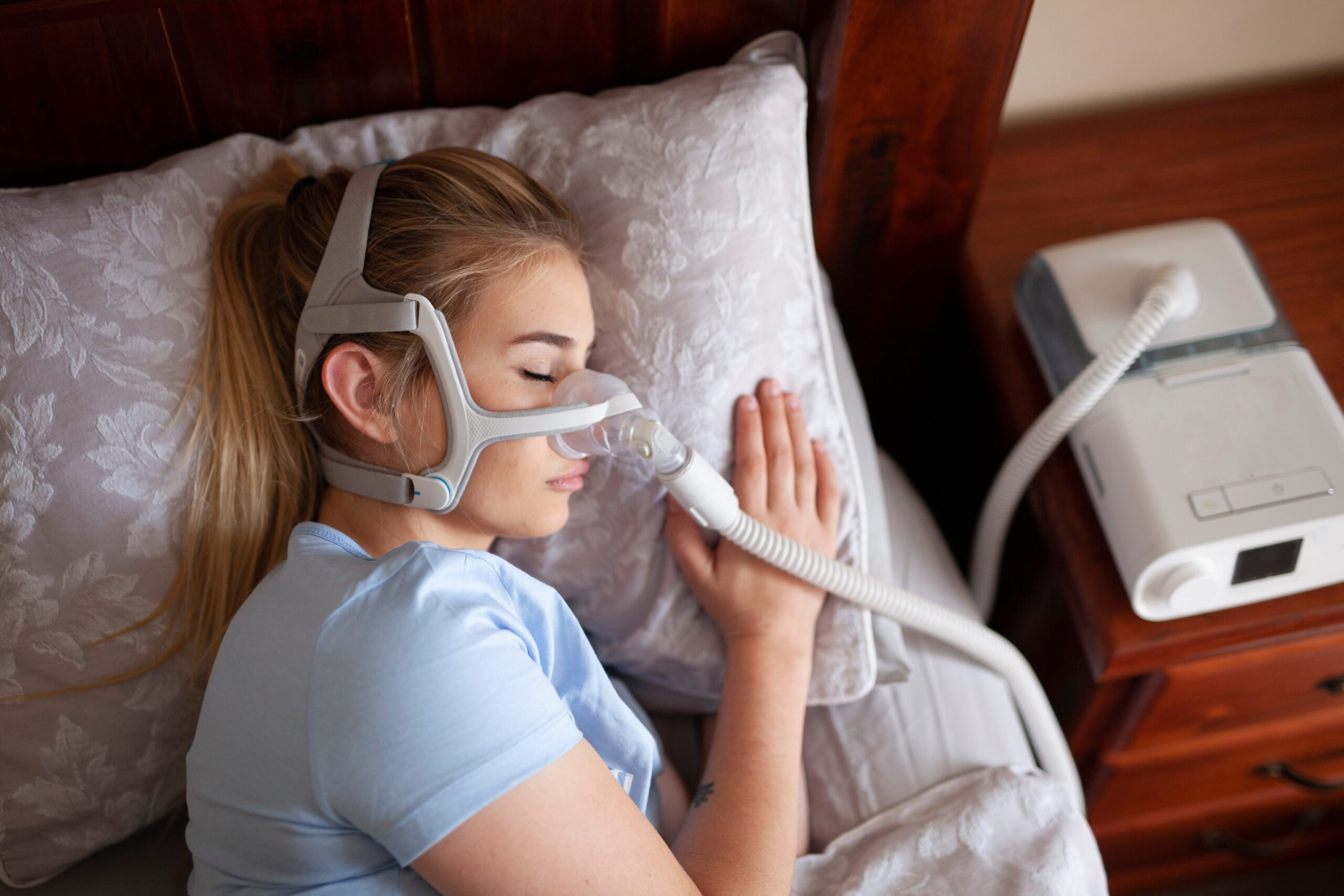
CPAP is often the starting point. A small machine delivers a steady stream of air through a mask, gently holding the airway open so breathing never stalls. It is very effective, and many people wake up feeling transformed once they adjust to it.
Dental oral appliance therapy and when it helps
For mild to moderate cases, or for those who cannot tolerate CPAP, a custom oral appliance is a comfortable alternative. This small, retainer-like device gently repositions the lower jaw to keep the airway open. It is quiet, travel friendly, and easy to wear.
Lifestyle changes and long-term follow-up care
Treatment works best alongside healthy habits. Weight management, limiting alcohol in the evening, and sleeping on your side can all help. Regular follow-up keeps your therapy fine-tuned so it stays effective over the years.
Use these
- CPAP for moderate to severe cases
- Custom oral appliances for mild to moderate apnea
- Side sleeping positions
- Healthy weight and limited evening alcohol
- Regular follow-up visits
Avoid these
- Ignoring loud snoring with gasping
- Alcohol and sedatives close to bedtime
- Over-the-counter devices without guidance
- Skipping a proper sleep study
- Stopping therapy once you feel better
The Dental Connection: How Your Dentist Fits In
Your dental team is often the first to notice signs of sleep apnea and can provide custom oral appliances that keep your airway open at night. A routine checkup can quietly open the door to better sleep.
Signs of apnea a dentist may spot during exams
During a regular visit, your dentist may notice worn teeth from nighttime grinding, a crowded airway, a scalloped tongue, or dry mouth. These small clues can prompt a timely conversation about screening. Part of the best preventive care for new patients is catching whole-body concerns early.
Custom oral appliances from your dental team
When an oral appliance is a good fit, your dentist takes precise impressions and crafts a device shaped just for you. A tailored fit means better comfort and better results than any one-size device. You can learn more about our approach to how we make first-time visits comfortable.
What to expect at your visit in Berlin, NH
At our Berlin, NH practice, your visit begins with a friendly conversation and a thorough look at your mouth, jaw, and airway. We walk you through what we see and coordinate with your physician when a sleep study is needed. New to us? Here is a step-by-step guide to your first dental checkup, and a look at why dental X-rays matter during your first visit. Call us at (603) 752-2013 to start the conversation.
Ready to take the next step?
Schedule a consultation with Androscoggin Valley Dental.
Call (603) 752-2013Meet Dr. Harry Gulati at Androscoggin Valley Dental
Dr. Harry Gulati, BDS, DMD, CAGS, brings extensive clinical, academic, and research experience to Androscoggin Valley Dental. He earned his Bachelor of Dental Surgery from Dr. D.Y. Patil Dental School, his Certificate of Advanced Graduate Studies in Restorative and Esthetic Dentistry from Boston University, and his Doctor of Dental Medicine from Tufts University School of Dental Medicine. He also completed advanced training in implant dentistry through the International Academy of Dental Implantology.
Known for his calm and patient-centered approach, Dr. Gulati provides preventive, restorative, cosmetic, and implant care with a strong focus on long-term function and natural-looking results. He takes the time to explain treatment options clearly, helping patients feel informed, comfortable, and confident throughout their care.
Beyond private practice, Dr. Gulati has served as an Associate Clinical Professor at Tufts University School of Dental Medicine, where his responsibilities have included clinical instruction, diagnosis, treatment planning, and mentoring dental students. He has lectured nationally and internationally on restorative dentistry, dental education, and the treatment of endodontically treated teeth. His professional contributions also include published research, editorial and journal review roles, dental product evaluation, and participation in organizations such as the American Dental Association, the Academy of General Dentistry, and the American Dental Education Association.
Dr. Gulati’s commitment to dentistry extends into the community through volunteer dental screenings, outreach programs, fundraising, and services supporting children and underserved populations. His dedication to clinical care, education, and service has earned several honors, including Incisal Edge’s Top 40 Under 40 recognition, the Doctors’ Choice Award, and fellowship in the International College of Dentists.
Learn more about Dr. Gulati’s professional background and accomplishments on his LinkedIn profile.
Frequently asked questions
The most common warning signs are loud, chronic snoring broken by pauses, gasping or choking during sleep, morning headaches, dry mouth on waking, and heavy daytime fatigue or brain fog. Mood changes and trouble concentrating are also frequent. If a partner notices you stop breathing at night, that is a strong reason to ask about screening.
A dentist cannot formally diagnose sleep apnea, since the official diagnosis comes from a sleep study ordered through a physician. However, dentists are often the first to spot clues like teeth worn from grinding or a crowded airway, and they can provide custom oral appliances to treat mild to moderate cases. Your dental team in Berlin, NH works alongside your doctor for complete care.
No, not every snorer has sleep apnea, and some people with sleep apnea snore softly or not at all. Snoring becomes a red flag when it is loud and chronic and interrupted by silent pauses followed by gasping or choking. If your snoring comes with daytime tiredness or witnessed breathing pauses, it is worth getting checked.
Sleep apnea is officially diagnosed through a sleep study, done either overnight in a lab or with a home sleep apnea test. The study measures how often your breathing pauses and your oxygen levels drop, producing an AHI score. In general, five or more breathing events per hour supports a diagnosis, with higher numbers indicating greater severity.
When sleep apnea goes untreated, your brain repeatedly loses oxygen and never reaches deep, restful sleep. Over time this fuels ongoing fatigue, foggy thinking, memory trouble, and mood changes, and it adds stress to your heart and blood pressure. Treating the condition restores steadier sleep and helps protect both your mind and your body.
For mild to moderate sleep apnea, a custom oral appliance can be a very effective and comfortable option, especially for people who struggle to use CPAP. CPAP remains the stronger choice for severe cases. The best approach depends on your severity and comfort, so your doctor and dental team can help you choose and monitor your results over time.
Want to schedule an appointment now? Follow our directions, use this helpful Google Maps link, or get step-by-step navigation via Get Directions.
Remember: Persistent snoring, gasping at night, and daytime fatigue are worth checking, because treating sleep apnea protects both your rest and your long-term health.
Disclaimer: This article is for general information only and does not replace personalized advice from your doctor or dental team.
